Like it or not, market volatility is an inevitable part of investing. When losses appear to be looming after touching the highs, it is understandable that
investor’s make emotional decisions to cut losses.
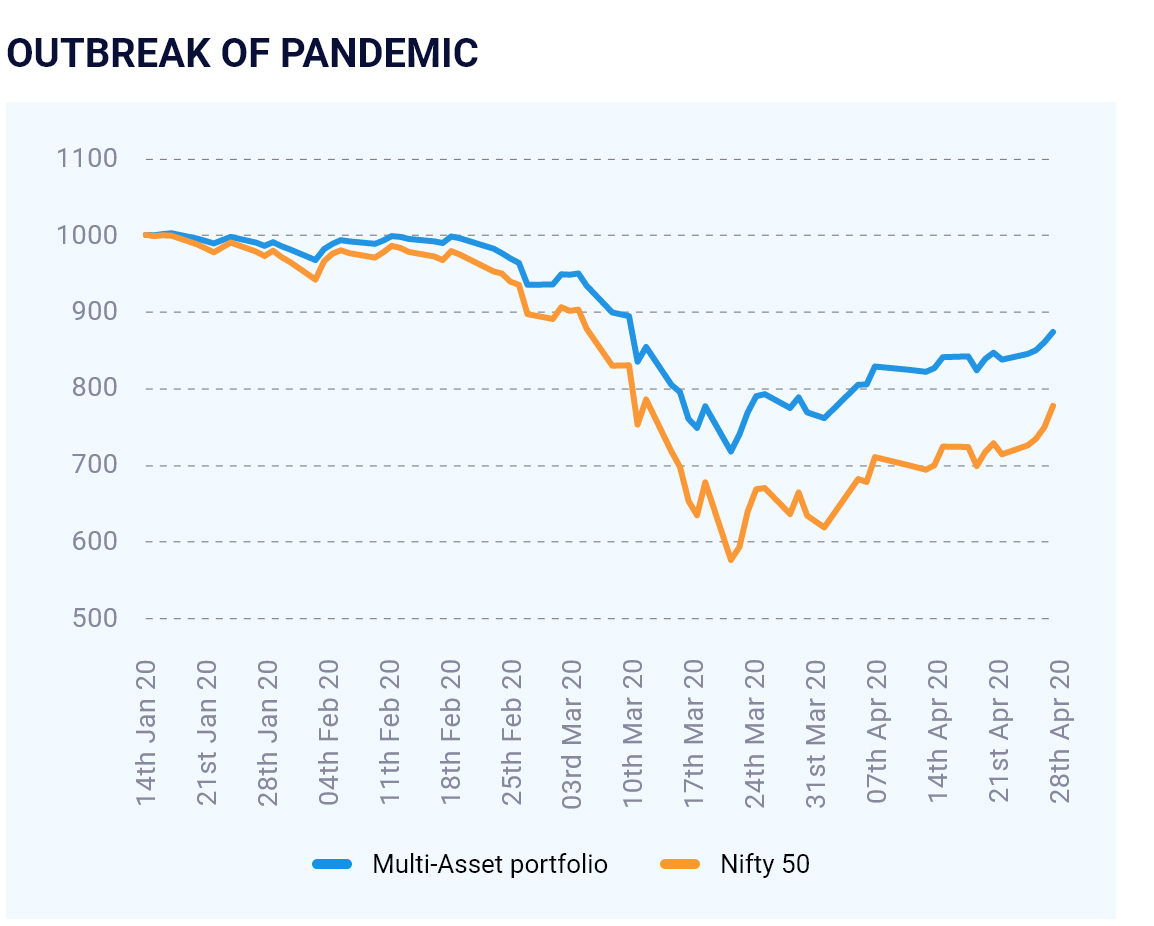
In mid-March 2020, many investors were tempted to flee for the exit when the Nifty 50 Index fell by 38.4% from its peak. However, investors who
remained invested saw the index rebound 13.6% in the following three days. Thereby, as an advisor, you can create a huge impact on your investors’
portfolio by correcting their behavioural mistakes.
Your first defence against these mistakes is to craft a diversified portfolio across different asset classes that matches your investors’ investment
horizon and risk tolerance. During times of market volatility, while the risky investments - equities (domestic/global) may fall, the overall portfolio
performance may not be so badly impacted.
A diversified portfolio is built of complementary assets that don’t usually perform the same way. This in turn smooths out the returns in volatile
times and helps mitigate risk in the portfolio.
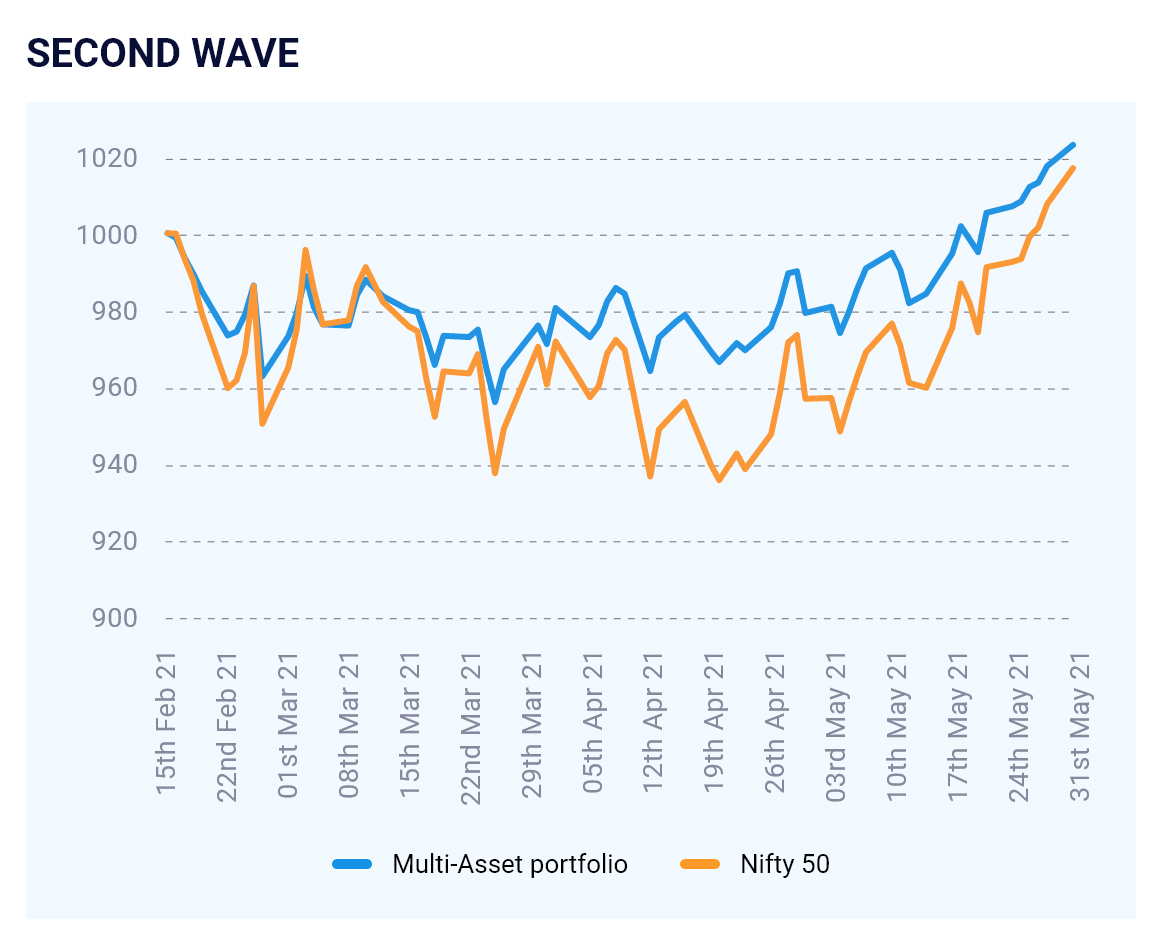
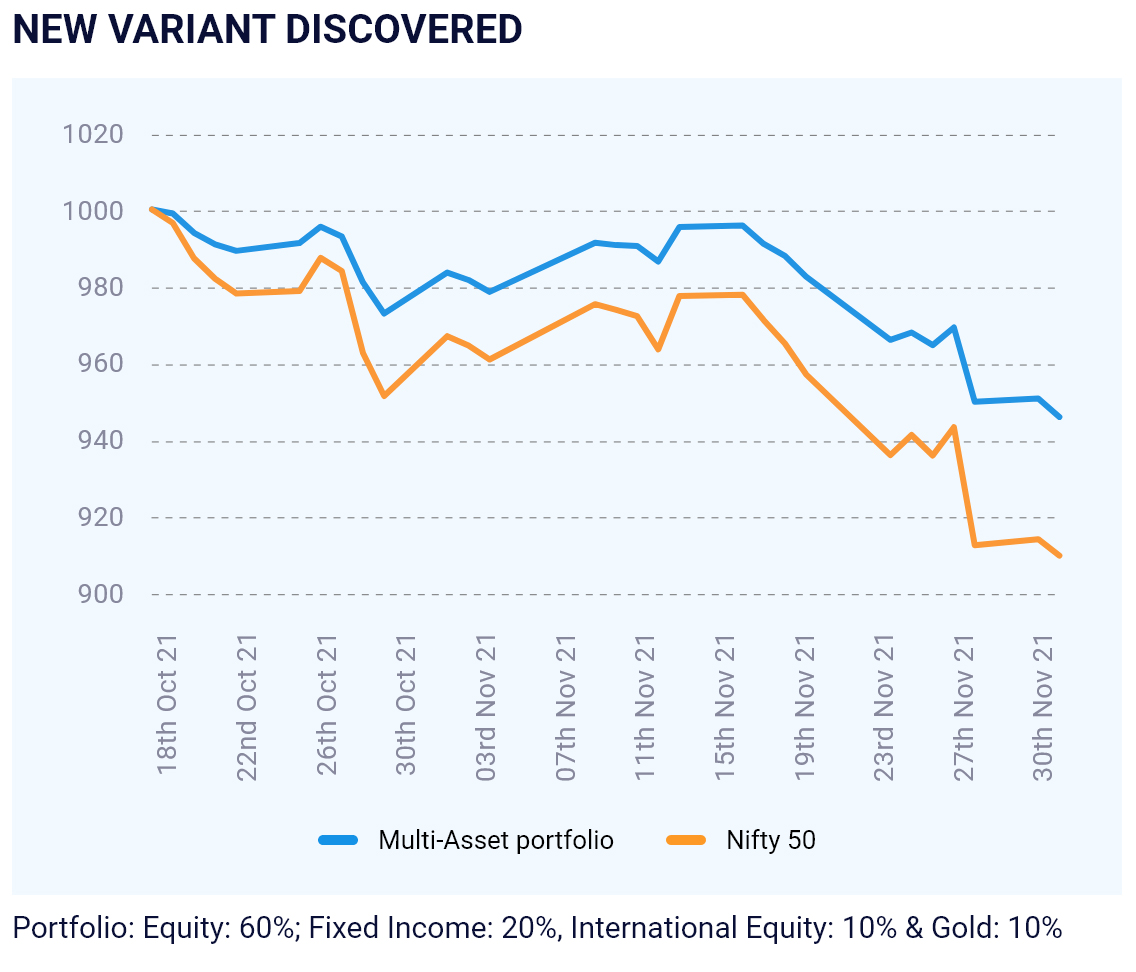
Consider an example of a multi-asset portfolio with allocation to equity, international equity, fixed income, and gold.
As seen from the above graphs, a multi-asset portfolio would have been
far more resilient through volatile times compared to a pure equity
portfolio.
Actionable Insights through Volatile times
Market volatility isn’t always bad news. Though it may be tempting to
concentrate on losses caused by price fluctuations, there may be
opportunities for gains.
1. Practically speaking, if an investor’s personal situation really hasn’t
changed, then staying the course and riding through these periods of
volatility is the logical course
2. Rupee cost averaging, the practice of doing a small top-up in your
overall portfolio during volatile times
3. Selling some of your loss-making investments, a practice called taxloss harvesting may prove beneficial. This strategy can help you offset
the taxes on your investment gains
The information contained herein (the “Information”) may not be reproduced or disseminated in whole or in part without prior written permission from the Company. The information herein is meant only for general reading purposes and the views being expressed only constitute opinions and therefore cannot be considered as guidelines, recommendations or as a professional guide for the readers. The document has been prepared based on publicly available information, internally developed data and other sources believed to be reliable. The directors, employees, affiliates or representatives (“Entities & their affiliates”) do not assume any responsibility for, or warrant the accuracy, completeness, adequacy, reliability and is not responsible for any errors or omissions or for the results obtained from the use of such information. Readers are advised to rely on their own analysis, interpretations & investigations. Certain statements made in this presentation may not be based on historical information or facts and may be forward looking statements including those relating to general business plans and strategy, future financial condition and growth prospects, and future developments in industries and competitive and regulatory environments. Although the Company believes that the expectations reflected in such forward looking statements are reasonable, they do involve several assumptions, risks, and uncertainties. Readers are also advised to seek independent professional advice to arrive at an informed investment decision. Entities & their affiliates including persons involved in the preparation or issuance of this document shall not be liable in any way for direct, indirect, special, incidental, consequential, punitive or exemplary damages, including on account of the lost profits arising from the information contained in this material. Readers alone shall be fully responsible for any decision taken based on this document.
Copyright © 2021 Fintso