
We can't even imagine what we'll be talking about 12 months from now. No one can predict the future; otherwise, we'd all be multi-billionaires.
However, several key investment themes are emerging for the next 3-5 years, which we would like to elaborate on further.
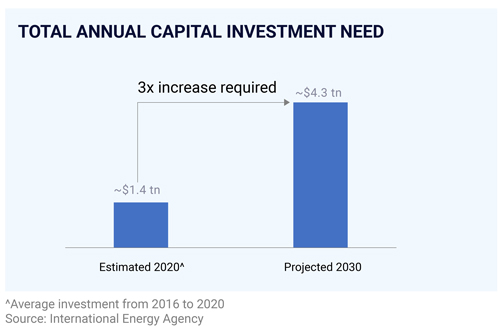
1. TRANSITION TO NET-ZERO
As countries across the globe gears up towards reducing carbon
emission, the demand for coal and fossil fuels shall decline steadily. To
enable the transition, governments worldwide shall expand spending on
renewable energy.
From an investment standpoint, the opportunities aren't just limited to
the companies that manufacture wind turbines or solar panels. These
projects will lead to a growing demand for certain industrial metals
such as copper, graphene, & lithium, putting upward pressure on prices.
2. ACCELERATION IN CRYPTOCURRENCY ADOPTION
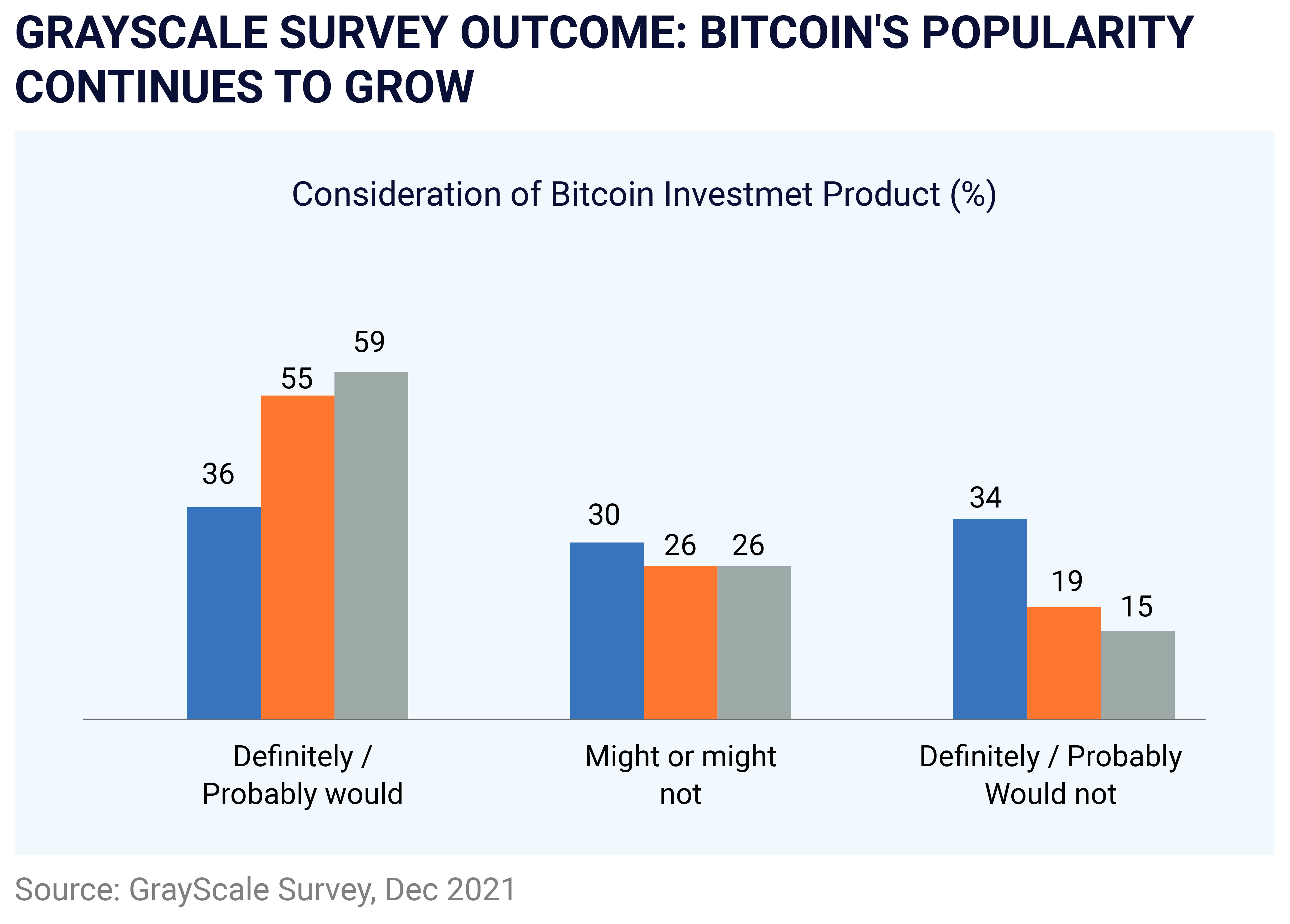
The cryptocurrency saw an incredible surge in adoption in 2021. Some of the cryptocurrencies saw a meteoric rise in their value during the year, tempting us to invest in these digital currencies. As per the survey by Grayscale Investments, these digital currencies shall witness a further increase in adoption rate even in 2022. Some billionaire investors like Ray Dalio, Paul Tudor Jones, and Peter Thiel have touted bitcoin over gold as a hedge against the current inflationary environment.
#Word of Cautious: One must note that these cryptocurrencies are highly volatile. Also, they are highly vulnerable to government regulations and social media activities. We believe it is in the best interest of the investors to avoid such speculative bets.
3. NEW BUZZWORD: METAVERSE:
Metaverse has been a hot topic ever since Facebook changed its name to Meta. Metaverse will create a hyper-real digital alternative world for you to coexist in it. It shall incorporate augmented reality, virtual reality, 3D holographic avatars, and other means of communication. There have been talks of the virtual world even before. However, this time around, big corporations' involvement (such as Facebook, Microsoft, Baidu) makes it more likely that it will be different this time. While Metaverse is poised to become a trillion-dollar industry, it is still in a very early stage. It is impossible to say which companies or Metaverse should benefit from this trend at this stage.
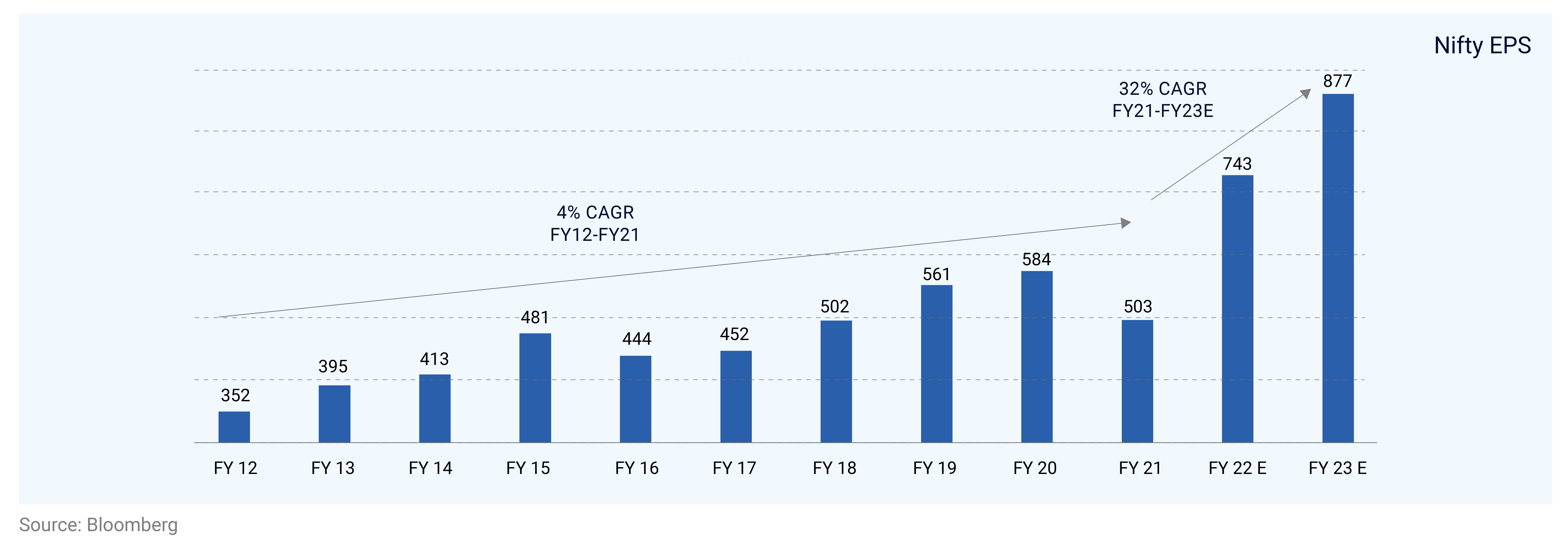
Like 2021, the equity market in 2022 will have its fair share of volatility. Several negative factors such as rich valuations, rollback of easy monetary policies across the globe, rising oil prices would lead to a market downturn. However, a positive economic backdrop and revival in corporate earnings will elevate equity gains.
EXPECT SOLID EARNINGS RECOVERY
Also, the year 2021 was spectacular for initial public offerings (IPOs), with Rs 1.20 lakh crore ($16 billion) raised over 63 issues. A sizable number of Indian tech startups will hit the public market in 2022. We believe markets will post their seventh consecutive year of positive returns in 2022, albeit more moderate returns than we saw in 2021. Buying on dips or accumulation would be an ideal strategy. We would encourage investors to focus on quality large and midcap companies available at reasonable valuations.
Fixed Income Outlook
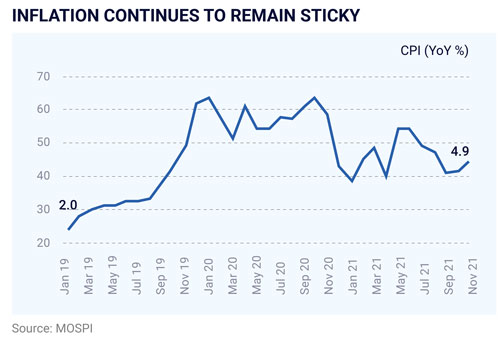
While the RBI's commentary focuses on supporting growth, the central bank is well on its way to normalizing monetary policies. While the RBI has been vocal about its unconditional support for growth, the stickiness in the headline inflation has forced the RBI to rethink its strategy. The RBI's action to conduct 3-day variable rate reverse repo shows its clear intention to suck out liquidity in the system. We expect the RBI to hike interest rates in the second half of 2022 if inflation remains elevated for an extended period.
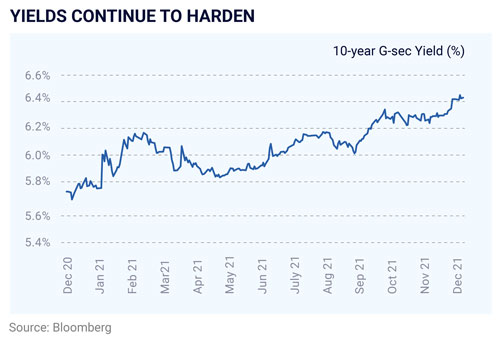
As we expect interest rates to be volatile, it is best to avoid funds investing in long-dated securities. Thereby, investors can consider investing in securities with shorter maturity (short duration funds and banking & PSU funds). Also, one can consider investing in floater rate funds as returns are adjusted based on prevailing yields in the market. To benefit from the steepness of the yield curve, one can invest in funds with 2.5 to 4 years of duration and run a rolldown strategy. Investors can continue to hold their investments in short (including money market) to medium duration funds as we expect a limited impact on these funds for a given change in interest rates. An investor invested in a long-duration fund can exit their holding after considering the tax event. However, investors invested in long-dated target maturity ETFs/Index funds can continue holding them until maturity.
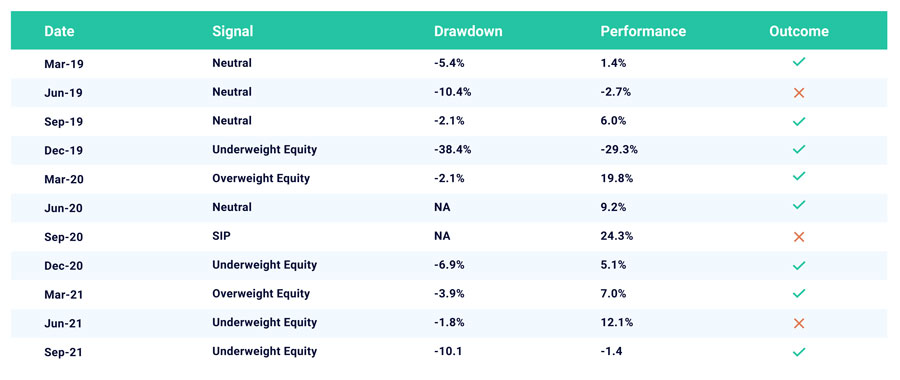
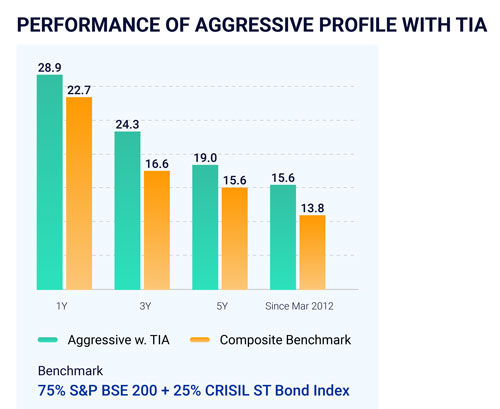
For the last two quarters (Q2FY22 & Q3FY22), our Tactical Intervention Approach (TIA) model has warned about the risk of a downturn; all that was needed was a catalyst to change sentiment. That occurred as news of the new covid variant broke. The entire global markets were in a tailspin as concerns of additional lockdowns and reversal in the current economic recovery gripped the market.
After touching an all-time high in mid-October, markets (as represented by Nifty 50) have corrected 10.1% by the third week of December.
For Q4FY22, expect increased volatility; however, our model shows an upward bias. To benefit from the expected volatility, we recommend allocating equity through the SIP route.
A quick recap on our model: We give distinct 15-18 input factors to our program, broadly classified into macro (market capitalization to GDP), valuation (P/E, P/B, etc.), momentum indicators, trends, volatility, liquidity, and so on. Besides their absolute value, we take the first derivative (implying % change and direction of the change) for some parameters.
The model identifies a pattern in the data set and produces market predictions without following instructions coded by humans. It helps us remove all biases and prenotions developed by humans on the markets.
Our past calls:
On Equity Markets
Higher interest rates can be damaging to the equity market. As the interest rate increases, the cost of borrowing money increases for both corporates and individuals, which typically leads to a curb in their spending. Corporates tend to delay their capital expenditures, while individuals, on the other hand, are left with less disposable income for spending. Over time, higher interest costs and less business could mean lower earnings for corporate, leading to a slower growth rate impacting their stock price.
Another approach to understanding the impact of rising interest rates on the equity market is through intrinsic value. In theory, a company's intrinsic value is the net present value of its future profits. The rate applied to discount future profits becomes critical while computing the present value. As the interest rates increases, this discount rate also increases and leads to lower intrinsic value.
Rising rates are associated with the falling equity market, but that is always not the case. Several other factors, such as future growth prospects, liquidity, and investor sentiment, can support the market.
On Fixed Income Market
A fundamental principle of bond investing is that interest rates and bond prices generally move in opposite directions. When interest rates rise, prices of bonds fall. That’s because government/corporates will have to issue new bonds in the market at higher interest rate payments. Thereby, existing bonds will decline in price to make their comparatively lower interest rate payments more appealing to investors.
Higher interest rates are not always so bad for long-term investors.
1. Re-investment: Higher interest rates offer long-term investors a chance to make higher long-term returns. Any maturing debt or coupon payments received can be invested at higher interest rates. Even for debt mutual funds which target a particular maturity profile range can reinvest any new inflows at a higher interest rate
2. Higher interest rates have a higher scope of beating inflation