




The information contained herein (the “Information”) may not be reproduced or disseminated in whole or in part without prior written permission from the Company. The information herein is meant only for general reading purposes and the views being expressed only constitute opinions and therefore cannot be considered as guidelines, recommendations or as a professional guide for the readers. The document has been prepared based on publicly available information, internally developed data and other sources believed to be reliable. The directors, employees, affiliates or representatives (“Entities & their affiliates”) do not assume any responsibility for, or warrant the accuracy, completeness, adequacy, reliability and is not responsible for any errors or omissions or for the results obtained from the use of such information. Readers are advised to rely on their own analysis, interpretations & investigations. Certain statements made in this presentation may not be based on historical information or facts and may be forward looking statements including those relating to general business plans and strategy, future financial condition and growth prospects, and future developments in industries and competitive and regulatory environments. Although the Company believes that the expectations reflected in such forward looking statements are reasonable, they do involve several assumptions, risks, and uncertainties. Readers are also advised to seek independent professional advice to arrive at an informed investment decision. Entities & their affiliates including persons involved in the preparation or issuance of this document shall not be liable in any way for direct, indirect, special, incidental, consequential, punitive or exemplary damages, including on account of the lost profits arising from the information contained in this material. Readers alone shall be fully responsible for any decision taken based on this document.
Copyright © 2022 Fintso
The best time to start investing is today You are different and so are your needs Why your returns are not the same as the market’s return? Understanding Taxation in Mutual Fund Investments

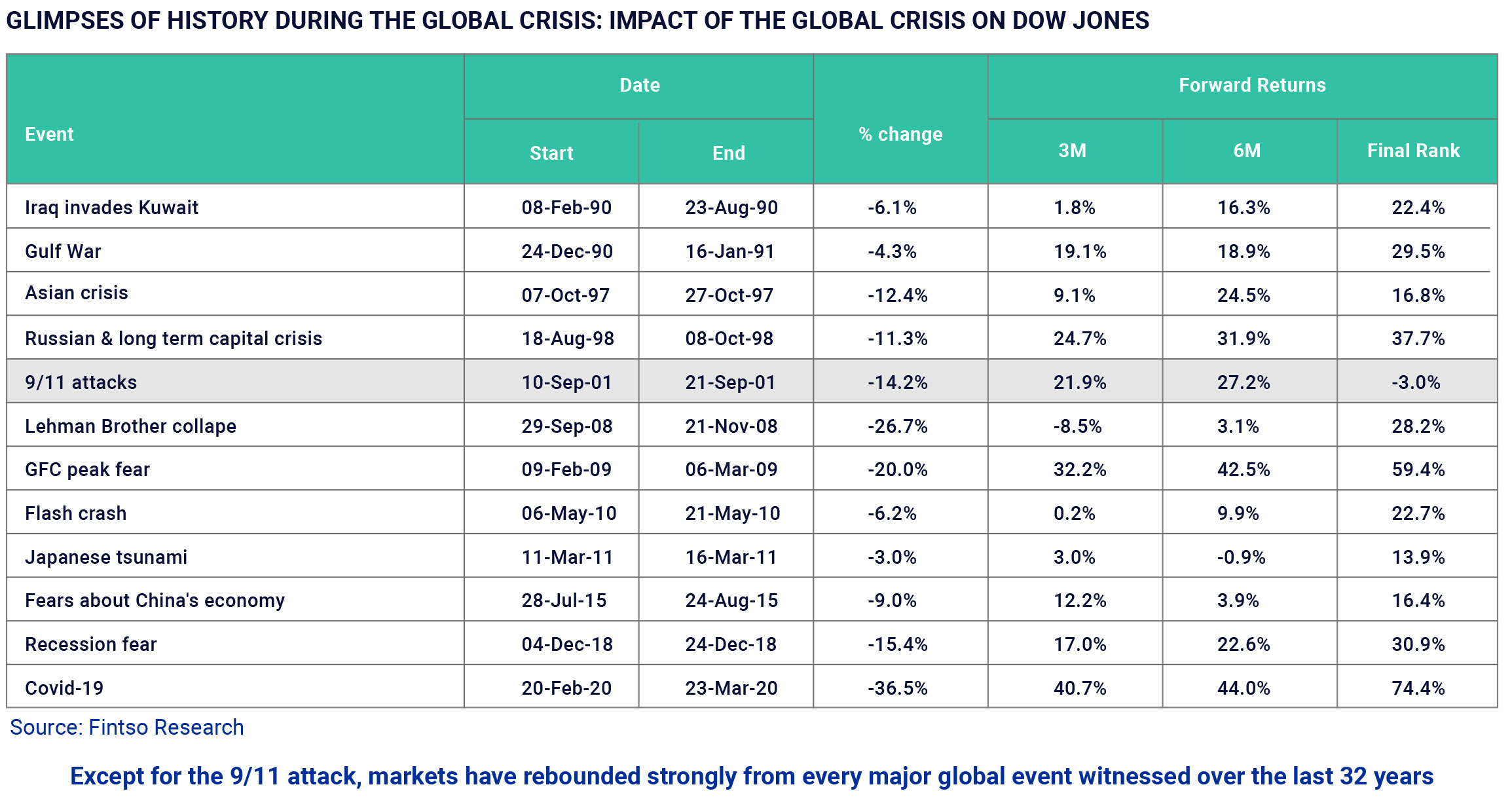
Russia’s invasion of Ukraine happened just when markets were getting ready for a series of Fed rate hikes, and encouraging signs were emerging that the world was finally moving to an endemic state of Covid.

Before this invasion, 2022 had already witnessed a selloff in global equities due to high inflation numbers and central banks worldwide pledged to end the easy liquidity situation. The Fed dot plot indicated around seven rate raises of a quarter-point each this year, followed by a few more rate hikes in 2023.

We were cautious on the markets even before the Russia-Ukraine crisis unfolded. With several sanctions imposed on Russia, we expect further disruption in the global supply chains, and this event will make inflation worse. Even the euphoria in the consumer confidence that was finally emerging from Covid after two long years may be curtailed by rising geopolitical tensions.

India has played a balanced approach by not explicitly siding with any of the major powers involved nor speaking up against them. However, the

surge in Oil & Gas prices due to global supply disruption poses a problem for the Indian economy. Higher oil prices could cause a rise in retail inflation and impact households’ discretionary spending. Also, it may widen India’s current account deficit due to higher oil import bills. India’s massive foreign exchange reserves shall help tackle any volatility in the currency.

From an equity markets perspective, the ongoing conflict between Russia and Ukraine could cause short-term volatility. The uncertainty around the Uttar Pradesh state election results and the Fed’s meeting in mid-March could impact the markets.

Given these headwinds, we would be cautious on the market and recommend spreading your investments over the next 3-6 months. Most stocks in the mid and smallcap segment have taken some beating due to the recent volatility and are now available at cheaper valuations. Systematically adding allocations to the midcap and smallcap segments could benefit over 3-5 years.
Commodities, Particularly Oil & Gas As Well As Industrial Metals & Mining
This theme was already working well this year. The Russia-Ukraine event further bolsters the case for its continuing outperformance

Alternative Energy Companies
This theme was already working well this year. The Russia-Ukraine event further bolsters the case for its continuing outperformance

Defense And Aerospace
We posit that the invasion of Ukraine will lead to a big-spending ramp up in this sector, and significant global arms suppliers will be the beneficiary

Global Shipping Companies
The disruption in supply chains and the need for Europe and Asia to increase their LNG shipments will keep shipping rates upward

Cybersecurity Companies
Cyberattacks are a big part of modern warfare among global powers. As Ukraine grinds on, the demand for companies that provide Cybersecurity will surge rampantly

Banks And Other Lending Institutions
They are the beneficiaries of rising rate environment as the spread between their borrowing and lending rises


The recent volatility in the markets has impacted your stock portfolio significantly. You see, some of the stocks you hold in your portfolio have fallen substantially. You also see that some of the companies you liked earlier, which were too expensive, are now better priced.

Some of the dilemmas you face now are:

1. Do I stay put?

2. Sell everything and stay out?

3. Sell a few and buy other stocks?


The even bigger question here is, how do you know if a stock you own needs replacement, or should you continue to hold?

Consider the following scenario, the stock you own has gone up 50% from your purchase price in the recent past. Given the market volatility, it has now corrected and reached back to your original buying price. You believe that the price will go back to its peak once the crisis is over. You also fear that the price may correct further, and you could be losing your capital, again, leaving with you a dilemma on what to do next.

1. The bottom-up stock-picking strategy helps you invest in fundamentally sound businesses that are expected to grow in the future. Based on the investment style of the manager, he could choose value or growth companies

2. The manager brings sector orientation to your overall stock portfolio. If a particular trend/sector has started to gain traction, the manager may realign the portfolio to benefit from the same. However, while managing our personal stock portfolio, we seldom fail to look at overall sector allocation

3. Most of these funds are managed as multi-cap portfolios, thereby giving managers the flexibility to invest in the most attractive segment of the market

4. Strategically add some revival/contrarian stories


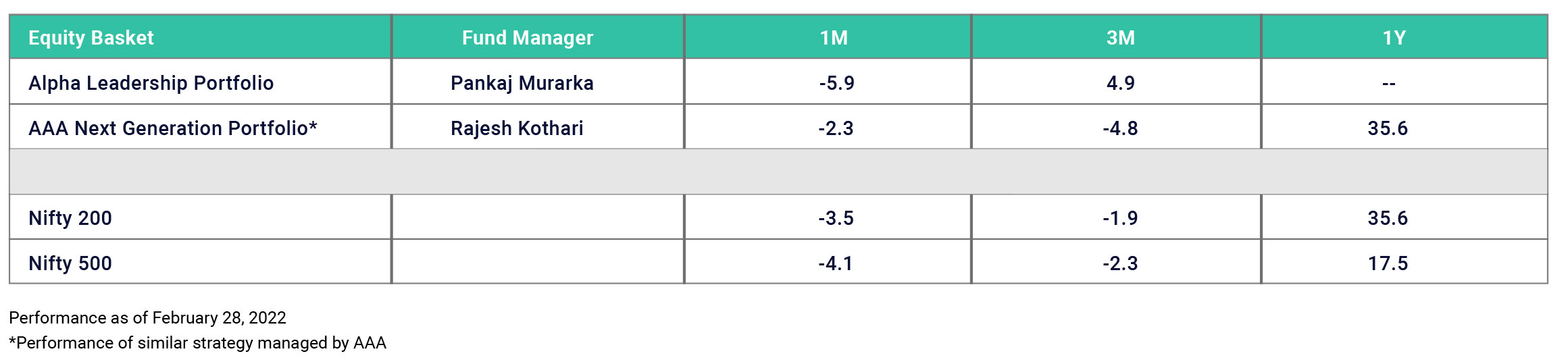
While it may be impossible to look at various aspects of portfolio management while directly investing in stocks, we believe it is best left to professional fund managers. Thereby, to add value proposition to your overall portfolio, we have two equity baskets (stock portfolio) managed by professional managers in the offering.

There are several products eligible for availing tax benefits under section 80C. These products range from life insurance policies to equity-linked saving schemes (ELSS). Most investors consider investing in National Saving Certificate (NSC) or Public Provident Fund (PPF) as they are government-backed and offer assured returns.

Any investment that offers assured returns and has low risk tends to offer moderate returns. On the other hand, investments in ELSS schemes can generate higher returns at a higher level of risk. ELSS schemes are equity mutual funds, thereby can be volatile. These schemes invest across market capitalization and have a lock-in period of 3-years.

The NSC, a post office savings product, is a fixed-income investment scheme offering an interest rate of 6.8% p.a. compounded annually with a lock-in of 5- years. The PPF is also a fixed-income investment product offering an interest rate of 7.1% p.a. compounded annually with a lock-in of 15-years.

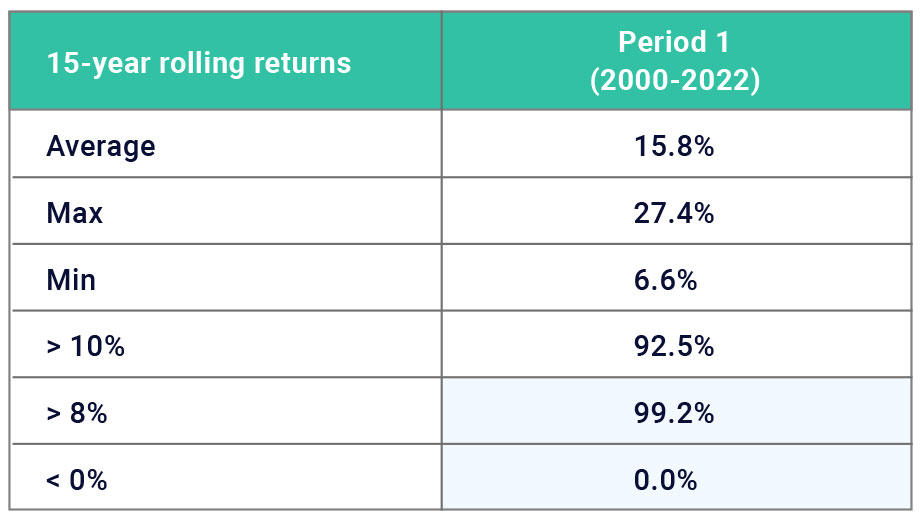
For an apple to apple comparison, we evaluate the rolling returns of 5-years, 7-years, and 15-years of ELSS schemes vis-à-vis returns offered by NSC and PPF
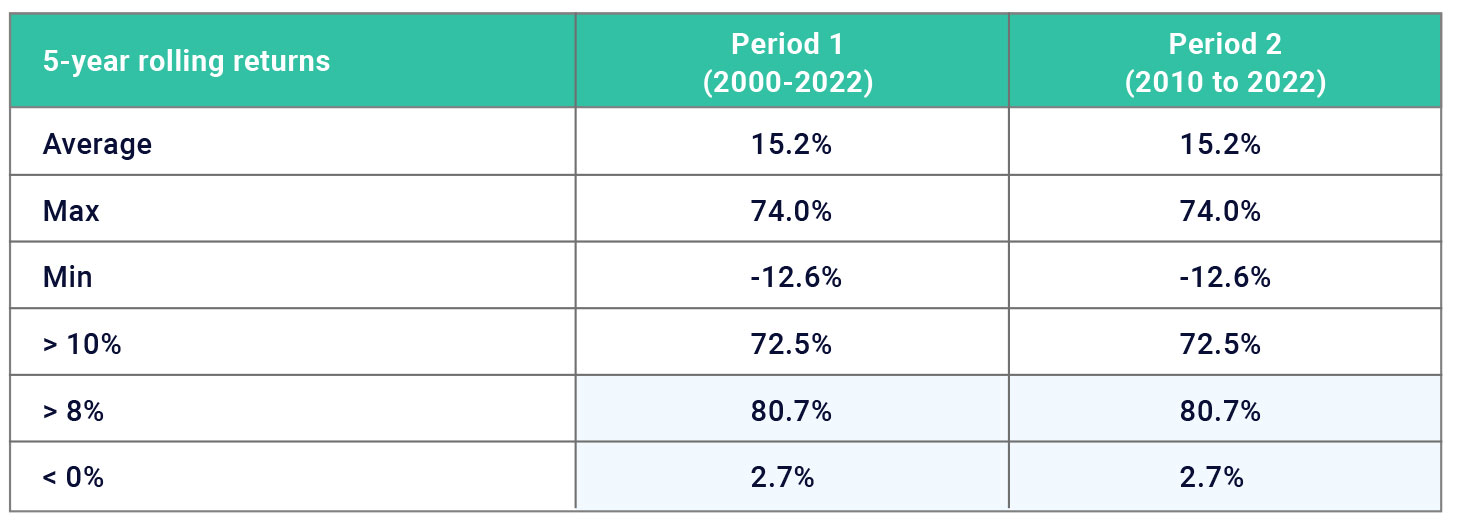
For a holding period of any 5-years from 2000-2022 (month-end), the average performance of all ELSS funds stands at 15.2%. Over this period, almost 81% of the time, these ELSS funds have given returns more than 8%, beating the returns offered by both NSC & PPF. Also, only 2.7% of the time, these ELSS funds gave negative returns for a 5-year holding period. Thereby, an investor with an even moderate risk appetite can consider investing in ELSS funds over other secured investments given the potential upside these funds have to offer (average of 15.2% CAGR, and generated more than 10% returns 72.5% of the time).

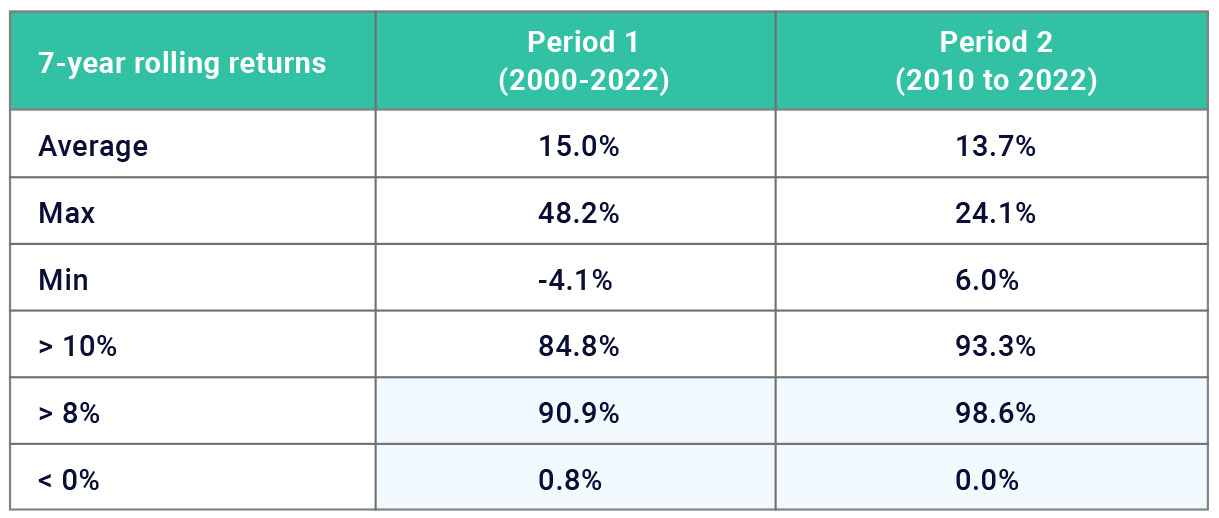
Similarly, when we look at a holding period of 7-years and 15-years, the case for investing in ELSS funds over NPS and PPF only becomes more robust
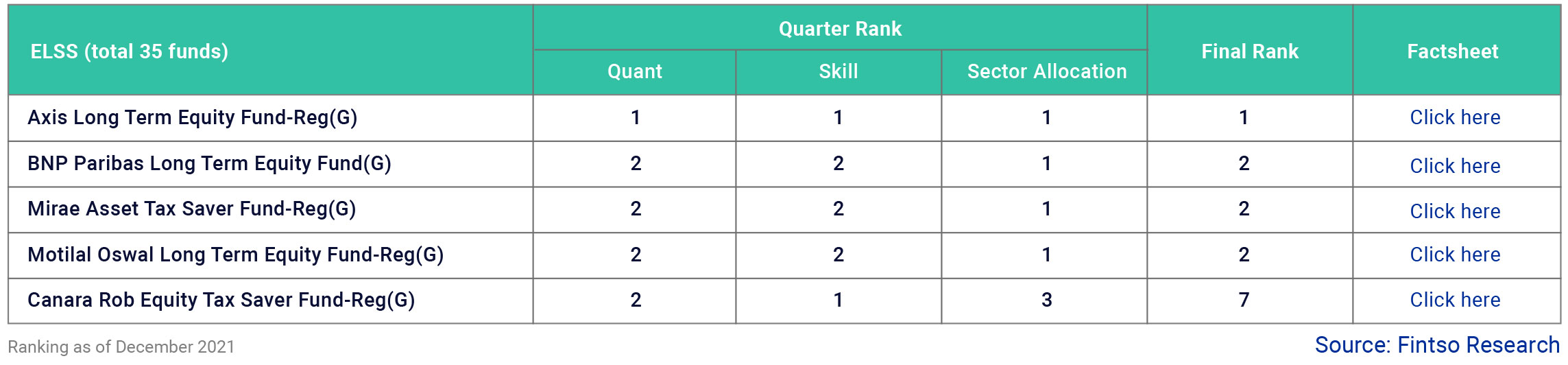
To further reduce the risk, we recommend investing in 2-3 ELSS schemes. Based on our fund selection process that considers performance and fund management aspects, below is the list of our recommended ELSS schemes.
The information contained herein (the “Information”) may not be reproduced or disseminated in whole or in part without prior written permission from the Company. The information herein is meant only for general reading purposes and the views being expressed only constitute opinions and therefore cannot be considered as guidelines, recommendations or as a professional guide for the readers. The document has been prepared based on publicly available information, internally developed data and other sources believed to be reliable. The directors, employees, affiliates or representatives (“Entities & their affiliates”) do not assume any responsibility for, or warrant the accuracy, completeness, adequacy, reliability and is not responsible for any errors or omissions or for the results obtained from the use of such information. Readers are advised to rely on their own analysis, interpretations & investigations. Certain statements made in this presentation may not be based on historical information or facts and may be forward looking statements including those relating to general business plans and strategy, future financial condition and growth prospects, and future developments in industries and competitive and regulatory environments. Although the Company believes that the expectations reflected in such forward looking statements are reasonable, they do involve several assumptions, risks, and uncertainties. Readers are also advised to seek independent professional advice to arrive at an informed investment decision. Entities & their affiliates including persons involved in the preparation or issuance of this document shall not be liable in any way for direct, indirect, special, incidental, consequential, punitive or exemplary damages, including on account of the lost profits arising from the information contained in this material. Readers alone shall be fully responsible for any decision taken based on this document.
Copyright © 2021 Fintso